

A group of people standing together in the open air

Rehab is the first step. The years after it are the recovery.

The 90 to 180 days most people spend in a facility is a very short period next to the years that follow. For many, adjusting to life afterwards is the harder part — the routine is gone and the old influences are back.
Support groups

Go, especially early. Keep going.

We strongly recommend that everyone in recovery attends support groups regularly, particularly in early sobriety. A group is people in recovery — and sometimes their families — meeting to discuss what they share, from how they first realised they needed to get sober to how a particular medication is affecting them.

The vast majority are 12-step programmes, which break recovery into steps all members follow. They are modelled on Alcoholics Anonymous — by research, the best known and most widely attended substance abuse group in the world.

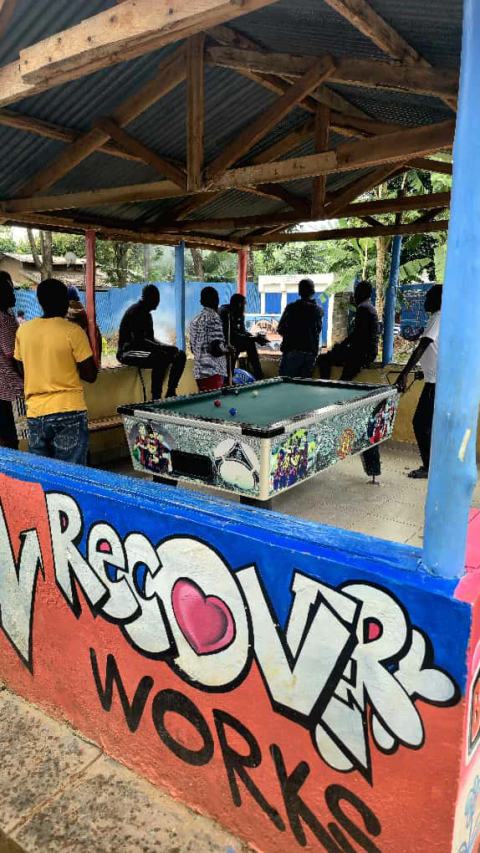
Clients gathered around a pool table under a shelter, with a "Recover works" mural in the foreground
A judgement-free room Members feel understood, because everyone there has been in some version of the same place.
Stability and people to fall back on A standing commitment in the week, and names you can call when a hard day arrives.
Advice and information Practical, lived knowledge about what works — from people with no reason to sell you anything.
Aftercare from us We follow up on discharged clients, place people in the right support group and continue therapy where it is needed — plus practical strategies for managing cravings and stress.
The first year

A continuous chain of small decisions.

Sobriety is hardest to hold early on, and grows easier as new habits, relationships and routines form. This is roughly when to do what.

1–30 days Build the scaffolding
—Develop a recovery plan with goals and how to reach them
—Learn to recognise and handle negative impulses
—Find healthy, supportive living arrangements
—Establish a daily routine and schedule
—Attend at least two support groups to find the best fit
—Find a counsellor or therapist
—Build a support system for when the urge appears
—Bring in regular physical activity — and avoid taking on too much
30–90 days Make it a habit
—Stay involved in support groups — at least weekly
—Continue counselling or therapy, ideally weekly
—Keep a recovery journal, including triggers and how you got past them
—Discuss professional goals with a career counsellor
90–180 days Repair and plan
—Begin repairing broken or damaged relationships
—Develop short and long-term goals with a financial planner
—Start focusing more on longer-term goals
—Try new hobbies, then commit to one or two
180–365 days Look outward
—Celebrate the milestones, especially six months and one year
—Help others who are just beginning the road
—Develop five and ten-year plans — personal, professional, financial
—Seek out new motivation and new ways to occupy your time
If you relapse

It happens to the most dedicated people in recovery. It is not the end of anything.

Some studies suggest the majority of people in recovery relapse at least briefly. Help is still here. Do not wait for the problem to get worse before you make the call — our relapse programme is two months, and we pick up where we left off.

Call us now · 0700 883 257 How treatment works
A father carrying his child on his back
Accessibility

Make this site easier to use

Adjust how this site looks and moves. Your choices are saved on this device.

Text size
Text size 100%
Display